

Industrial climate action includes using energy more efficiently while maintaining production. The IPCC identifies energy and material efficiency among the measures needed to reduce industrial greenhouse-gas emissions. Compressed air is one practical area for improvement because factories can measure its electricity consumption and identify avoidable losses. IPCC: AR6 Synthesis Report, Summary for Policymakers.
Connect electricity consumption with emissions
An electric compressor uses energy produced elsewhere unless the site generates its own supply. When that electricity comes from fuel-burning generation, associated emissions occur at the power plant. A factory’s purchased-electricity emissions are generally reported as Scope 2. The relevant calculation combines electricity consumption with an appropriate emission factor. EPA: purchased-electricity emissions guidance.
This means a verified reduction in compressor electricity use can lower calculated electricity-related emissions. The amount depends on the electricity supply, the reporting method and the factor used. An equipment upgrade should therefore be assessed with both meter readings and a clearly identified electricity-emissions basis.
Use PM VSD where demand changes
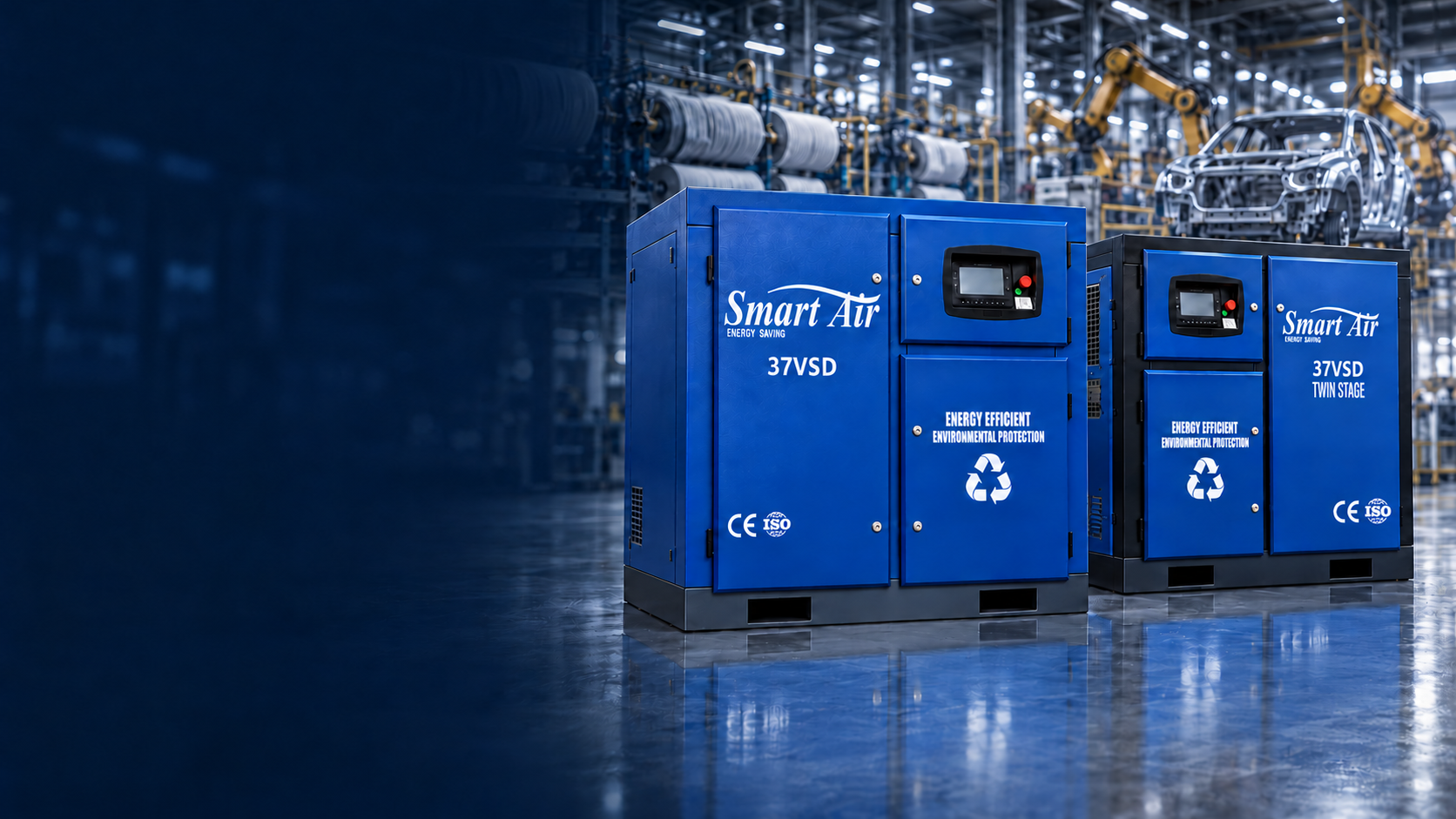
SmartAir’s PM VSD single-stage SA series adjusts compressor speed within its control range to follow air demand. During suitable variable-demand operation, this can reduce unnecessary unloaded running compared with an existing fixed-speed arrangement. The benefit depends on sizing, control settings and the actual production schedule.
The Australian Government recommends efficient part-load compressors for changing demand and trimming duty. It also highlights turning off unnecessary equipment and monitoring system energy use. A VSD upgrade works best within this wider system approach. Australian Government: efficient compressor operation.
Make environmental benefits measurable
Begin with a baseline: record annual electricity use, operating hours, production output and required air pressure. After improvements, compare periods with equivalent useful output. Where production changes, report both total electricity and an intensity measure, such as compressor kWh per tonne of finished product.
For an illustrative calculation, a verified annual saving of 30,000 kWh combined with an assumed factor of 0.40 kg CO₂e per kWh gives 12,000 kg CO₂e, or 12 tonnes, of calculated avoided electricity-related emissions. The factor is an example, not a published value for Pakistan or a SmartAir product rating.
Use a current, documented factor appropriate to the factory’s electricity supply for an actual inventory. Keep the original readings, calculation period and production records so that customers or auditors can understand the result.
Reduce waste around the compressor
Air leaks, unnecessarily high pressure and unused compressed-air connections increase demand without increasing useful production. Map these losses and address them systematically. Check whether each application needs compressed air and whether its required pressure can be met without raising the entire network’s setting.
Responsible operation also includes managing lubricants and condensate. SmartAir’s oil-injected compressors require suitable servicing and air treatment. Collect lubricant-containing condensate for appropriate treatment and manage used lubricant and filter elements responsibly. The DOE sourcebook addresses condensate treatment as part of system management. DOE: condensate handling guidance.
Evaluate the complete working life
Electricity consumption is only one part of environmental performance. Equipment manufacture, replacement components, servicing and end-of-life handling also matter. Comparing two machines should include their expected duty, repairability and remaining service life, as well as their operating efficiency.
For a SmartAir installation, establish an energy baseline, select a correctly sized SA model and verify the result after commissioning. Continue monitoring pressure, useful airflow and maintenance condition. This produces a specific, traceable environmental improvement: the electricity actually avoided and the associated emissions calculated using a stated method.